

Buffalo Nickel (1913-1938)
Return To Index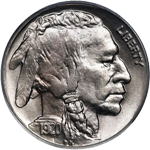
Drescription:
The Buffalo Nickel, minted from 1913 to 1938, is a renowned U.S. coin designed by James Earle Fraser, featuring a Native American profile on the obverse and an American bison (buffalo) on the reverse. Known for its rugged Western theme, the nickel is prized for its artistry and includes two major types: Type 1 (1913) with the bison on a raised mound, and Type 2 (1913–1938) with the bison on a flat ground line.
Key Design and Features:
Obverse: A right-facing portrait of a Native American, believed to be a composite of Chiefs Iron Tail, Two Moons, and Adoeette. The word "LIBERTY" is in the upper right, with the date at the bottom left.
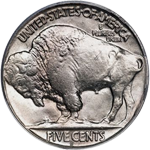
Reverse: An American bison, modeled after "Black Diamond" from the Bronx Zoo, standing on a mound (1913 Type 1) or a flat plain (1913–1938 Type 2). Inscriptions include "UNITED STATES OF AMERICA," "E PLURIBUS UNUM," and "FIVE CENTS".
Composition: 75% copper, 25% nickel.
Mint Marks: Located on the reverse, beneath "FIVE CENTS" (P, D, or S).
Collector Notes:
Varieties: Type 1 (raised ground) and Type 2 (flat ground) exist for 1913.
Key Dates: The 1913-S Type 2, 1914-D, 1921-S, and the 1937-D "Three-Legged Buffalo" are highly sought after.
Condition: Many nickels show heavy wear on the date, making "Full Date" examples more desirable.
Design Change: The reverse was modified shortly after release to address rapid wear on the mound, creating the more common Type 2.
Key Design and Features:
Obverse: A right-facing portrait of a Native American, believed to be a composite of Chiefs Iron Tail, Two Moons, and Adoeette. The word "LIBERTY" is in the upper right, with the date at the bottom left.
Reverse: An American bison, modeled after "Black Diamond" from the Bronx Zoo, standing on a mound (1913 Type 1) or a flat plain (1913–1938 Type 2). Inscriptions include "UNITED STATES OF AMERICA," "E PLURIBUS UNUM," and "FIVE CENTS".
Composition: 75% copper, 25% nickel.
Mint Marks: Located on the reverse, beneath "FIVE CENTS" (P, D, or S).
Collector Notes:
Varieties: Type 1 (raised ground) and Type 2 (flat ground) exist for 1913.
Key Dates: The 1913-S Type 2, 1914-D, 1921-S, and the 1937-D "Three-Legged Buffalo" are highly sought after.
Condition: Many nickels show heavy wear on the date, making "Full Date" examples more desirable.
Design Change: The reverse was modified shortly after release to address rapid wear on the mound, creating the more common Type 2.