
Morgan Silver Dollar (1878–1904, 1921)
Return To Index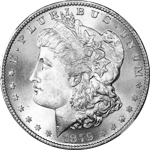
Drescription: The Morgan Silver Dollar (1878–1904, 1921) is one of the most iconic and widely collected coins in American history, named after its designer, U.S. Mint Assistant Engraver George T. Morgan.
Design Elements
Obverse (Front): Features a left-profile portrait of Lady Liberty. George T. Morgan broke with tradition by using an American woman, Anna Willess Williams, as his model rather than a Greek-style figure. Liberty wears a Phrygian cap adorned with wheat and cotton blossoms, symbolizing America's agricultural heritage. The motto "E PLURIBUS UNUM" appears above her head, with 13 stars and the date below.
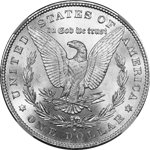
Reverse (Back): Depicts an American bald eagle with outstretched wings, clutching an olive branch (peace) and three arrows (readiness for defense). A laurel wreath encircles the lower half of the eagle. Inscriptions include "UNITED STATES OF AMERICA," "ONE DOLLAR," and the motto "IN GOD WE TRUST" in stylized Gothic script.
Designer's Initial: Morgan's initial "M" is subtly placed at the truncation of Liberty’s neck on the obverse and on the left loop of the ribbon tying the wreath on the reverse.
Mints and Marks
Mint marks are located on the reverse, just below the wreath and above the "DO" in "DOLLAR".
None: Philadelphia Mint (struck all years).
CC: Carson City Mint (1878–1885, 1889–1893).
S: San Francisco Mint (1878–1904, 1921).
O: New Orleans Mint (1879–1904).
D: Denver Mint (1921 only).
Historical Significance: The coin was authorized by the Bland-Allison Act, which required the Treasury to purchase millions of dollars worth of silver every month to be coined into dollars. Production was halted in 1904 when silver supplies were exhausted but was resumed for one final year in 1921 under the Pittman Act before being replaced by the Peace Silver Dollar.
Design Elements
Obverse (Front): Features a left-profile portrait of Lady Liberty. George T. Morgan broke with tradition by using an American woman, Anna Willess Williams, as his model rather than a Greek-style figure. Liberty wears a Phrygian cap adorned with wheat and cotton blossoms, symbolizing America's agricultural heritage. The motto "E PLURIBUS UNUM" appears above her head, with 13 stars and the date below.
Reverse (Back): Depicts an American bald eagle with outstretched wings, clutching an olive branch (peace) and three arrows (readiness for defense). A laurel wreath encircles the lower half of the eagle. Inscriptions include "UNITED STATES OF AMERICA," "ONE DOLLAR," and the motto "IN GOD WE TRUST" in stylized Gothic script.
Designer's Initial: Morgan's initial "M" is subtly placed at the truncation of Liberty’s neck on the obverse and on the left loop of the ribbon tying the wreath on the reverse.
Mints and Marks
Mint marks are located on the reverse, just below the wreath and above the "DO" in "DOLLAR".
None: Philadelphia Mint (struck all years).
CC: Carson City Mint (1878–1885, 1889–1893).
S: San Francisco Mint (1878–1904, 1921).
O: New Orleans Mint (1879–1904).
D: Denver Mint (1921 only).
Historical Significance: The coin was authorized by the Bland-Allison Act, which required the Treasury to purchase millions of dollars worth of silver every month to be coined into dollars. Production was halted in 1904 when silver supplies were exhausted but was resumed for one final year in 1921 under the Pittman Act before being replaced by the Peace Silver Dollar.